Monday, September 28, 2009

The Fishing Trip


For my 10th birthday, I had just one request. I wanted my father to take me fishing.

I had it all planned. This was not going to be fishing with a cane pole from the bank of the bayou a block or two from our house. Heck, that would've been too easy. My best friend Patrick Grant and I – along with almost every other kid in the neighborhood – fished by ourselves in that bayou all the time. We didn't consider that "real" fishing though.

For real fishing you needed a real rod and reel. And a real tackle box. And a real lure, not a worm or cricket or scrap of bacon on a hook. Most of all, you needed a boat.

The rod and reel were easy. For months, I had pored over the slick color advertisements in Boys' Life Magazine and I had found the perfect gift. The ad promised that, in exchange for $10 plus a small amount for shipping and handling, you would receive a 100% genuine grown-up "fishing kit" that virtually guaranteed huge fish would be jumping into your arms. The kit featured a rod and reel, a collection of lures, and a hunter green tackle box.

I must've done a pretty good sales job that year, because on my birthday, February 10, 1964, my father proudly presented me with the fishing kit I had seen in the magazine ad. The rod was tiny – it looked like it was made for a 3-year-old – and the lures were poor imitations of the shiny, multicolored "H&H" lures we kids had spent hours examining near the check-out counter of our local Pak-A-Sak convenience store. Worst of all, the tackle box was a cheap-looking, diminutive plastic case not much larger than a size 3 shoebox.

I tried to hide my disappointment. Still, it was exactly what I had requested, and I remembered the smiling boy in the ads. We could make this work. My father had spent ten whole dollars on this gift, and I was not about to appear ungrateful.

Since my birthday occurred in what passed for mid-winter in Louisiana, the actual fishing trip was scheduled for a time when the weather turned warmer.

Finally, the day arrived. May 17, 1964. It was a Sunday morning, 3 days after Dad's own birthday, his 43rd.

The night before, as I was carefully preparing my clothing and gear for what was sure to be the greatest triumph of my young career as an outdoorsman, my father asked me what time people were supposed to leave for a real fishing trip. I had heard that fish were hungriest when they just woke up, so I guessed 4:30 a.m. Dad grimaced and suggested 7 o'clock. We compromised, as I recall, on 6:00. The next morning, we were up early. As we quickly ate breakfast, Giffy packed tuna salad sandwiches and fresh fruit for our lunches.

And then we were off on our grand adventure.

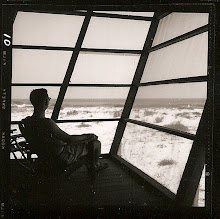
Dad drove north from Shreveport on Louisiana Highway 1. We passed through the barely awake towns of Blanchard and Mooringsport. We crossed a low bridge on the edge of our destination, Caddo Lake – a huge body of water which straddles the border between Louisiana and Texas. Caddo Lake, named for the Native Americans who lived in the area beginning in the 16th century, is reportedly the largest freshwater lake in the South and home to the largest cypress forest in the world. Of course Jack Marshall had his camera, and when we arrived at the small marina in Oil City, he took a moment to frame the photograph at the top of this entry, just as the sun began to peak through the huge old cypress trees.

Now it was time for some serious fishing. Dad paid our rental fee, and I clambered down into the little aluminum row boat. He snapped one more photo, the one of me smiling through my thick glasses (my 10th year may have been the absolute peak of my geekiness, as you can see in the photo at the beginning of the article). When I found this photo recently, I shouted out loud, "Oh boy!" There was no one to hear my shout, but I was overwhelmed because I did not know this photograph even existed. Looking into my own face, eyes and smile from a time more than 45 years ago recreated in me the very same feeling I had at that very moment: absolute, pure, boundless, giddy joy.

And then, we shoved off into the still, black waters of Caddo Lake. The intrepid fisherman in me entertained visions of huge fish, mounted forever on the wall of my bedroom. Dad allowed me to select the first fishing spot. Miraculously, the little fishing kit functioned perfectly, and soon my lure was in the water. Dad had a rod and reel too, and he tried his hand. Alas, this spot held no luck for either of us. We moved on to another quiet corner of the lake, and then another. Not even a nibble. By 9:30, we were eating the sandwiches, and talking quietly. Man to man (sort of). Like fishing from a boat, this too was a new experience for me. By 11, with no fish in the boat and running low on food, we headed back to the marina. We were home by noon.

Rather than being disappointed, though, I was satisfied. We had given real fishing a try. We had bonded as father and son. Looking back, I realize now Jack Marshall had given me the most valuable gift of all, his time. In the process, he taught me some important truths about parenting – that a child's dream is important to follow, even if the reality doesn't quite live up to the hope. That sometimes just being there is truly the best gift. And that you can say "I love you" in actions as well as in words.

It was, without any doubt, the greatest day in my young life.

– Tom Marshall, New York City

Wednesday, September 23, 2009

Forever Mary


Whenever a new acquaintance asks me if I have any brothers or sisters, I always tell the same story. I say, yes, I am from a good Catholic family. I have two older brothers – John and David – and then me, Thomas, and then I always say, "Followed by a little sister named ... " And then I pause and raise my eyebrows in question and wait.

About 99% of the time, the following then happens. I watch the wheels turn in the brain of this person to whom I've presented this fun little challenge. Then after a few seconds, they inevitably brighten and triumphantly announce to me:

"Mary!"

And I smile and say, "YES!" And then I tell them that Mary was, is and always will be "The Princess" of Jack Marshall's family. And usually they chuckle agreeably and say they understand how that certainly must be true.

Mary Louise Marshall arrived on the scene on October 29, in a year I dare not mention, when I was about 2½ years old. At that very moment, the balance of power in what had been decidedly a male dominated household (with my father and his three sons easily holding the gender advantage over the lone woman in the house, Giffy) changed forever.

Gone were closets full of blue baby and toddler clothes, passed down from one brother to another. Gone were jeans with multiple knee patches. Gone were trips to the emergency room for one injury or another. Gone were boys who smelled like ... well ... BOYS!

In their place were all new clothes. Pretty pink things with satin ribbons. Sweet smelling baby powders and lotions. Lacy dresses, knee socks, patent leather shoes. Bangs and baby dolls.

And one more thing. More pictures of Mary than of all of the rest of us put together.

Jack Marshall, the father of three sons, was a great documentarian of our young lives. When little Mary came along, Jack Marshall, father of three boys and one precious little girl, was smitten. Jack Marshall was overcome by the desire to capture and preserve for all time every cute little expression, smile, giggle, flirt and characteristic of his only daughter.

The pictures you see with this post – a portrait (top), taken when Mary was not quite 3, the picture of her splashing in the puddled rain in the back yard of our then brand new house on Audubon Place (bottom) taken on June 29, 1963, and the self-portrait of Mary and Jack together (at the beginning of the post) – are three of what are literally dozens (or perhaps hundreds, I can't say for sure) of photographs of Mary that I have encountered since I began the project of compiling Dad's photographs for The Jack Marshall Collection™.

Sometimes I think, this all makes me sick!

And if Mary weren't such a wonderful person, and a great sister, and a loving wife to Larry Cobb and the super mom to some fantastic nieces and nephews of mine, it probably WOULD make me sick. But she is all of those things, so I can't really begrudge my father for wanting to immortalize seemingly every moment of her young life.

If you want to see more of my father's photographs of his precious little daughter, click here for the "Mary" gallery on The Jack Marshall Collection™ website. (Come back often to this gallery because I promise I will be adding more photos.) And if you want to see what she and her brothers and mother look like now, this photo was taken last Thanksgiving.

Today, Mary still has traces of that same impish smile, and she unfortunately has passed on to all of her children the subconscious need to stick out their tongues to "get it just


right" when trying to accomplish a difficult task. I still can see that little girl in her every day. The pictures that Jack Marshall took of his little Princess are a wonderful legacy, to be treasured forever.

(By the way, I'm totally fine with all of this. I have no problem whatsoever with the fact that Dad liked her best. Or that my older brothers beat up on me but I never was allowed to lay a finger on Mary. Over the years, I've come to terms with all of it. The therapy and medication haven't been too expensive, and the doctors say that some day I'll be 100% cured. Really. I'm good.)

– Tom Marshall, New York City

Monday, September 21, 2009

Life at St. Joe's


When I was a rookie altar boy in the early 1960s at St. Joseph's Catholic Church in Shreveport, I often would be assigned to serve at the 6:15 a.m. weekday Mass. My father, Jack Marshall, would shake me awake at about 6, and I would dress quickly and then hop on my bicycle and begin pedaling through the early morning mist toward St. Joe's.

Down the block, as I passed my best friend Patrick Grant's house, he'd often be coasting down the driveway on his bicycle and the two of us would ride together the half-block or so from Atlantic Street to the church, entering the side door to the sacristy by 6:10. By 6:14, we were dressed in our altar boy robes and had lit the few candles in front of the sparse but faithful group of daily Mass-goers scattered throughout the church.

Then, no more than 30 seconds before the scheduled beginning of Mass, a young Irish priest, Father Richard Lombard, would blow through the sacristy door and don his robes with a practiced speed that I believe surely would have beaten even Superman's best time for a wardrobe change. And then, at precisely 6:15, we'd ring the little bells and start our quick procession to the altar. Mass was under way, and if you were an altar boy for Father Lombard, you had to be on your toes.

That's because Father Lombard – especially in the days of the Latin Mass, with the priest's back to the congregation and prayers and responses mumbled in a rote script that was barely understood – was the all-time champion of speed-Mass and, as a result, the altar boys' favorite at St. Joe's. Mass with Father Lombard was a precision ballet of perfectly timed Latin prayers, rituals of water and wine, the ringing of bells, and the distribution of communion. If you served at Father Lombard's 6:15 a.m. Mass, you could finish your duty and be at home eating Giffy Marshall's hearty breakfast by 6:30 or so.

It was, most certainly, a modern miracle of religious brevity.

But serving at early Mass was only one aspect of life at St. Joe's. Beginning with its founding in 1949 by some 250 families (the young family of Jack and Giffy Marshall included), St. Joe's has been the center of life for thousands of Catholic families in Shreveport for more than a half century. Most live in the Broadmoor area of town where the church always has been located. For these families, St. Joseph's remains the religious, educational and social heart of the community.

On November 28, 1962, Jack Marshall took the photograph at the end of this entry. It shows me (third from left) and some of my third grade classmates at St. Joseph's giving a presentation in Newman Hall, the school's multipurpose cafeteria. My fellow 6:15 a.m. altar boy, Patrick Grant, is at the far left.

To me, this photograph illustrates what St. Joseph's was – and is – all about. Young people learning and growing in a happy, safe, and caring place. I know there are adults today whose recollections of their early Catholic educations are not the same as mine. But my own childhood memories of those years are filled with nothing but goodness, feelings of always being cared for, a strong dose of needed discipline, and a happy, loving environment.

To be sure, we at the same time feared and adored the priests, nuns and teachers who were always there for us. We had favorite teachers – the names McCollough, Touchstone, Searcy, Slette, Vermaellen and Sister Leonita come to mind – and we had ones we dared not cross, whose names shall remain anonymous.

One nun among the many provided to St. Joseph's by the Sisters of Divine Providence was a woman who inspired our greatest combination of fear and affection. She was our principal, Sister Bernard Marie, a compact bundle of energy with a powerhouse personality and a stronger force of will than even the most determined sixth grader. Nicknamed "The Little Tank" by a generation of St. Joseph's schoolchildren, we all walked the halls in trepidation, lest we break one of the many rules necessary to keep chaos at bay in a school teeming with kids from toddlers to preteens. Because if you broke the rules, you had to answer to Sister Bernard Marie.

At the same time, I remember her compassion, creativity and obvious commitment to the students of St. Joseph's. Sister Bernard Marie most of all clung to a fervent desire that every child at our school should succeed and excel. And a belief that every child could do just that. I treasure the photo at the top of this entry that Jack Marshall took of me with her on what must have been my First Communion day on March 30, 1961. You can see not only my ill-fitting suit, dubious fashion choice in shoes, and slicked down hair, but also my excitement. And most of all, the look of pure joy on the angelic face of Sister Bernard Marie.

A few years ago, my mother sent me a newspaper clipping about the death of this great lady. It brought back a flood of memories of a very special time in my life. I'm so glad Jack Marshall was there, as he almost always was, camera in hand, to capture many of those moments, so I can share them with you now.

While I was finalizing my research for this entry, I called the office at St. Joseph's. There are almost 500 children enrolled there now, I was told – an all-time high. And guess what else? On the church's website, I saw the smiling face of Father Richard J. Lombard, still serving the parish 50-some years later. I was told that Father Lombard has served other churches since my long-ago early morning altar boy times, but is now back at St. Joe's and going strong at a time when lesser men would have slowed. But apparently "slow" is not in Father Lombard's vocabulary. When I mentioned that he was a speedy Mass celebrant way back then, the woman on the other end of the line chuckled fondly and said, "He still is!"

Nice to know some things never change. Like the importance of family, teachers, and taking care of our children. And maybe even the speedy celebration of daily Mass in a wonderful old church.

–Tom Marshall, New York City


Saturday, September 5, 2009

Giffy Marshall


Ask anyone in Shreveport, Louisiana, if they know Giffy Marshall, and chances are, you'll get a positive answer.

Although she was born in Jacksonville, Florida, and lived in places such as Baltimore, Atlanta, and even at the St. Mary of the Pines School in Chatawa, Mississippi, Yvonne Louise Adele Gifford Marshall originally was a New Orleans girl through and through.

As a youngster, she was known as "Yvonnette," since her mother was also named Yvonne (see the "Mère" entry from August 26, below). Then, in 1944, she met Jack Marshall, a young naval officer back from two years service in the Pacific. They met at a dinner party -- each as someone else's date -- but then their own romance blossomed at New Orleans' old Naval Supply Depot, where they both worked in the closing days of World War II.

I don't know all the details of their courtship and early life together, but a few things are ingrained in family lore. Their first official date was dinner in the Caribbean Room at The Pontchartrain Hotel in New Orleans. Another memorable evening was spent enjoying oysters at the still thriving Casamento's restaurant on Magazine Street. They were joyously married on March 2, 1945, just a few short months before the end of the war, at Holy Name of Jesus Church on St. Charles Avenue across from Audubon Park (see photo below) and honeymooned at the ritzy Broadwater Beach Hotel in Biloxi, Mississippi. They suffered together the unspeakable tragedy of the death of their firstborn, little Mary Dale Marshall, who lived only three days after her birth in December 1945.

Soon, they moved to Jack's hometown of Shreveport, where Yvonne Gifford Marshall soon became known to her friends as "Giffy." And for the past 60-plus years, the love affair between Giffy Marshall and Shreveport, and between Shreveport and Giffy, has grown exponentially. You've heard of "Six Degrees of Separation," the theory that any two people in the world are probably no more than six people away from knowing someone in common. For years, if you gave Giffy five minutes of your time, those six degrees often could be reduced to one.

It was on June 28, 1959, in the yard of our little white house on Atlantic Street, that Jack Marshall created the above portrait of his bride, by now the mother of me and my three siblings -- John, David and Mary. It is obvious to me that he was proud of Giffy and of that picture, for he signed it, in ink, at the bottom right, an unusual gesture for a man who was just discovering his gift for photography.

The legend of Giffy Marshall grew over the years. Like many women of her day, she hosted dinner parties and scout troop meetings with equal aplomb. She made friends everywhere she went. No one has ever worked a room better than Giffy in her heyday. And every weekday, my father left work and came to her kitchen for a homemade lunch, even if it was only a tuna salad sandwich, so that they could spend an extra few minutes together.

In her role as devoted wife and mother, Giffy didn't surprise us very often. Once, though, I remember her bursting into a string of expletives (well, not the WORST ones) after burning herself on the kitchen stove. Mary and I looked at each other in total shock. Appalled, Giffy explained to us that she had discussed swearing with our parish priest and he had assured her it was OK. "He said that in cases like this, it's almost like a prayer," she said proudly. Mary and I were not convinced.

Even though she never had the opportunity to attend college (which she always regretted), she was well read and a whiz at English grammar. We turned to Dad for help in math but Giffy always was the one who knew how to diagram a sentence.

It is her traditional values of kindness and charity for which she is best known. Even in the tense racial separation era of 1960s Louisiana, I remember her taking me aside when I wondered aloud why people seemed to be treated differently. "It's not right," Giffy said. "We are all God's children." It wasn't until I was a teenager that I realized a person could become overweight simply by eating too much or not exercising enough. She quickly silenced any snickers about a particularly heavy person we might see in the grocery store with one of her most memorable pronouncements: "Shhh, don't say that, she might have a glandular problem."

When Jack Marshall died in 1976, we thought Giffy would be lost. But somehow, she was not. She was strong, healthy and happy, living in the dream house they built together and surviving financially because of the great insurance my father left for her. She took college courses, tried weight training, enjoyed an endless variety of pets who found their way to her door, went to Mass almost daily, joined social clubs and went to the theater, traveled to visit her children and grandchildren, and attended more graduations, weddings and funerals than just about anyone in Shreveport. She never remarried.

My most telling memory of the bond between my mother and father happened on a long-ago family vacation. It was the early 1960s, driving somewhere across the great American countryside. Oklahoma, I think. Giffy always loved history, and made a point of sharing it with her husband and children, whether we were interested or not.

And, driving on two-lane roads of old, there always were historical markers to be seen, to add to her body of knowledge. My father tolerated her passion for these highway stopping points, no matter how much he wanted to get to the next town, campground or motel. He enjoyed teasing her about this, too, calling them "hysterical markers." But still, he always stopped, and we gathered 'round to listen to her solemn reading of the marker, perhaps even to take a family picture in front of the spot where this or that happened long ago.

Until this one time. Giffy, riding shotgun, had noticed the sign. "Historical marker 5 miles ahead kids," she said, tapping the window. My brothers at the windows of the back seat, and me between them, ignored her with practiced indifference. Mary, sitting in the middle front, had her head on Mom's shoulder. "Three miles to the marker, Jack," Giffy said. But now she was fighting to stay awake against the mesmerizing rhythm of the wheels of our old Chevrolet.

Before I knew it, Dad and I were the only two still awake. I saw the signs building dramatically outside the car window. "Historical Marker One Mile"..."Historical Marker 1000 Feet"..."Historical Marker HERE." I caught my Dad's eye in the rear view mirror as we sped past. I was horrified. I opened my mouth to speak, and -- with a look of what only can be described as male conspiracy -- he shook his head at me, almost imperceptibly.

We never did see that little piece of Oklahoma history. But I learned something that day, about my Dad's love for my mother, which, though strong and true, did not require him to wake an entire car, making good time, for one more historical marker.

Now, at 85, Giffy is living with her sister, Elise, in the house that Jack Marshall built. Just a year or two ago, Mom -- always sharp and with a memory for every detail of our lives -- started to become forgetful. Now we know she has Alzheimer's disease, and the fog is descending upon her mind, albeit at a thus-far mercifully slow pace. She no longer drives her old red Buick. But if there is a "good" stage of Alzheimer's, that's where Giffy is now, for she still knows her siblings and her children and, on good days, most of her grandchildren too. She hasn't the capacity to remember the sorrows of yesterday, nor to worry about tomorrow. She seems happy and content.

However many years she has left (and we all certainly hope it is many), Giffy Marshall already has lived a long, wonderful, happy life. Her sister, brother, children, grandchildren and great-grandchildren have been blessed by her unfailingly sweet nature and the unceasing, lifelong, unconditional love she has bestowed upon us.

I know there never will be a Giffy Marshall hysterical marker at her Audubon Place home in Shreveport. Maybe, though, there should be.


- Tom Marshall, New York City

Sunday, August 30, 2009

Steamboat Gothic


It is the most iconic photograph in The Jack Marshall Collection™.

This photograph (above) of San Francisco Plantation, on the Great River Road near Garyville in St. John the Baptist Parish, Louisiana, was captured by Jack Marshall sometime in late 1958 or early 1959. This breathtaking home, built in 1856, was listed on the National Register of Historic Places in 1974. It certainly is one of the most distinctive of the dozens of plantation homes that dot both sides of the lower Mississippi River.

According to the plantation's web site, the home's unique architecture, viewed from some angles, closely resembles the "ornate yet graceful superstructure of a Mississippi riverboat." It is the inspiration for the novel "Steamboat Gothic," written by Frances Parkinson Keyes about a family she imagined lived there.

Earlier this year I investigated Jack Marshall's darkroom at my mother's house in Shreveport for the first time in the 33 years since his death in 1976. The process of discovery was amazing and fun, as each cabinet and drawer revealed new treasures. Now as I study and organize the many prints my father so lovingly printed, annotated and stored, the many variations of this photograph have emerged as possibly the most often printed image of Dad's work.

That's why I selected "Steamboat Gothic," as Dad titled his work as well, to be the home page image on the main web site of The Jack Marshall Collection™ (www.jackmarshallcollection.com) which is launching this week.

To me, this remarkable image of a well-known South Louisiana plantation house is not only one of the best examples of my father's artistic talent, but also provides a perfect insight into how he worked. Another view from below the steps is published at the end of this entry. The key to understanding how Jack Marshall worked can be found in the detail of my sister Mary, somewhere around 2 years old, determinedly toddling her way down the plantation's grand staircase.

If Mary was 2 years old at the time of this photo, I would have been about 4. And although I don't remember the exact circumstances surrounding the trip during which Dad created this image, it doesn't matter. Because the Marshall kids were usually there when Dad was making photographs.

That's the point of this entry.

Jack Marshall almost always had a camera -- or two -- around his neck. Of the thousands of photographs which I am now organizing, a huge percentage are images of my mother, brothers, sister, aunts, uncles, cousins, classmates and friends. But while he was taking our pictures, he also always was looking up at the big world around us. And then turning the camera in other directions, for many remarkable, memorable photographs.

By the time Dad took the family out West for our camping adventures, we were totally accustomed to the many extra photo-taking stops along every road, hike, dam, beach, picnic and tour. The memories of all of those places come flooding back to me as I study the tiny images on hundreds of contact sheets, the small index prints of each roll of film my father shot and developed and filed away. Inevitably, there are pictures of Mary and me, or John and David, or my mother, or all of us, standing in front of a National Park entrance, or a motel restaurant, or a "Welcome to Colorado" sign, or a quiet campground or frightening canyon rim. And on those same sheets of tiny family photos often I find stunning images of soaring mountain peaks, roaring rivers, heart-stopping valleys, and sunsets so beautiful I want to cry.

I was there with my living, breathing, happy-in-the-moment Dad, I remember again. I was there when he would say to us, waiting in the car, "Just one more minute." While he watched through his tripod-mounted camera for just the right moment and light to get the photograph he envisioned. Dad was with his family, taking photographs, in his element, doing what he loved most.

I was there once. And through The Jack Marshall Collection™, now you can be there too.


- Tom Marshall, New York City

Wednesday, August 26, 2009

Mère


All of us knew her by one simple name, "Mère."

Even though Yvonne Louise Goodrich Gifford was tiny in stature, standing just over 5 feet tall in her stocking feet, you can tell by her regal bearing in Jack Marshall's 1960 portrait of her (above) that she was a giant of a woman.

More than a century after her family moved to America from Paris, Yvonne was born on November 7, 1890 in the family home on Esplanade Avenue at the edge of the Vieux Carré in New Orleans. As a toddler, she spoke her family's native French almost exclusively at home. Years later she recalled, "We played games in French, we spoke French around the dinner table, and my mother said we even sinned in French!" At the age of 8, she was made to learn English to start elementary school. She was a member of a well-to-do family that published a daily French-language newspaper, L’Abeille de la Nouvelle-Orléans. She enjoyed performances from the family's reserved seats at New Orleans' famous French Opera House. But the family eventually fell on hard times. She married and moved around the Eastern seaboard for her husband's work and then was divorced with four young children, a struggling career woman forced to make difficult choices for herself and her family.

Despite everything that happened in her life -- the good and the bad -- Mère lived into her 95th year. She read nearly every news article published in the daily editions of The Times-Picayune, the ultimate owner of the assets of her family's long-ago media empire. She welcomed 12 grandchildren and the first of what eventually would number 19 great-grandchildren. Just last summer her sixth great-great-grandchild was born. She worked full-time until she was nearly 80 years old. She outlived not only her youngest child (Gloria Gifford Keefe) and a beloved son-in-law (Jack Marshall), but also several physicians who over the years solemnly predicted her imminent demise.

Now, 119 years after her birth and nearly 25 years since her death, Mère is without a doubt the solid rock upon which remarkable generations have descended and prospered.

But her real legacy is best kept in the many memories precious to her family even to this day.

When I was very young, going on vacation more often than not meant loading the 6 of us in the Marshall family's 1950s-era non-air conditioned Chevrolet and traveling 321 miles, much of it down the two lanes of Louisiana Highway 1, from Shreveport to New Orleans. The trip took all day, and by the time we arrived at her sprawling apartment on Pine Street, near St. Charles Avenue and Broadway in uptown New Orleans, we were dirty, hungry and exhausted.

But we were thrilled to be there!

Mère's kitchen smelled wonderful. The apartment was full of people, including our aunts, uncle and and cousins, who had decamped there to welcome the Marshall clan. Around the cacaphonous dinner table, Mère always happily chirped, "Let only six talk at a time!"

My sister Mary and I got the choice sleeping accommodations, on the airy, screened front "sleeping porch." We looked down on the busy neighborhood sidewalk.

Each night we excitedly snuggled into makeshift bedding and drifted off to sleep with a symphony of unfamiliar sounds in our ears -- the honking cars of big city traffic on nearby Broadway, wailing sirens of New Orleans police and fire units working through the night, and the clanging streetcar bells on "The Avenue" (St. Charles) just a few blocks away. We were awakened at dawn each morning by the smell of chicory-laced coffee brewing in the kitchen and the novelty of loud, mechanized garbage trucks working their way down the narrow street. It seemed to Mary and me that the garbage men probably were paid more if they could bang each can's lid on the sidewalk with the loudest possible noise. We thought it all a grand adventure.

There were some hilarious misadventures too involving the fearsome landlady who lived downstairs. Like the time my brother David, then probably 10 years old and never at a loss for words, upon being introduced to the landlord, is reported to have said, "YOU'RE Mrs. Steckman? My grandmother says you're HORRIBLE!" Or the time I found some green paint, meant for shutters, in the garage and proceeded to apply a coat to a section of white exterior wall. Realizing the trouble I was in, I raced inside and hid under Mère's bed. When the illicit painting was discovered, I was the prime suspect and a boy hunt ensued. I recall that finally my aunt Elise Aimée discovered me. From my narrow floor level vantage point, I saw her upside-down head peering at me. "Here he is!" she shouted to the other searchers. And then turning back to me, she asked, "Tommy, what are you doing under there?" Thinking fast, I replied, "Oh, just resting."

Over the years, life changed, but Mère did not. For a while, she lived in a lovely, small apartment in a building called "The Monterey" on St. Charles, just a block or two from Napoleon Avenue. She loved the corner stores of K&B Drugs, where it seemed that everything, including mouthwash, baby powder, and tissues, was made and sold in the chain's trademark purple color.

Later she lived in an apartment on Jefferson Highway and then finally in an assisted living apartment called Metairie Manor, run by the Catholic Archdiocese of New Orleans. In fact, though, Mère didn't need much assistance.

Still, she read the newspaper daily. She joked that she turned to the obituaries first and "if I don't see my name, I know I'm going to have a good day." She maintained that she wasn't afraid of dying, but always added, "I'm not ready to go just yet." She reveled in Louisiana's infamous politics and voted in every election. She drank a glass of sherry every night, and she slept soundly.

One day, in March of 1985, the name Yvonne Goodrich Gifford finally did appear in the obituaries of The Times-Picayune. Mère was laid to rest in the Dufour/Goodrich family burial site, Tomb No. 27 in St. Louis No. 1 Cemetery on Basin Street, the oldest cemetery in New Orleans.

My most enduring memory of Mère dates to about a year or so before her death. I was living in New Orleans, and my first child, James, was born in 1983.

One Sunday afternoon I took baby James to her apartment. Mère sat in a rocking chair and held his tiny body close to hers, swaying gently. She closed her eyes and I heard her singing what sounded like a sweet lullaby. I stepped back to take a picture (which I still treasure) and then I leaned in close to listen to her song. But I didn't understand a word ... she was singing in French to my little son. Just as she had been sung to as a child of Esplanade Avenue, and just as she had done with her children when they were little.

In life, Mère often had joked that the tomb at St. Louis No. 1 Cemetery was to be her "final apartment," always adding with a wry smile, "I'm just sorry it doesn't have a window." I understand that the woman I knew as Mère is not really living there of course. But in heaven, no doubt, there is a daily newspaper, some juicy politics and a glass of sherry for Yvonne Goodrich Gifford, our matriarch.

À votre santé Mère!

- Tom Marshall, New York City

Wednesday, August 19, 2009

Ludendi's Rollerdrome


No Marshall kid ever had a birthday party at Ludendi's Rollerdrome. We were told that hosting a party there was reserved for the rich kids, whose parents were doctors or lawyers or oil men.

At least that's what I was told. My sister Mary remembers it differently. Mary says she was told we couldn't host a roller skating party at Ludendi's because we didn't know how to roller skate.

Judging by Jack Marshall's photo of me trying out my wheels (above) at a late 1950s party, maybe Mary was correct.

But when one of those other kids -- better coordinated or simply better off, it made no difference to me -- invited us to their skating party, it was a treat not to be missed.

Not just because of the roller skating, but because of Ludendi's Rollerdrome.

Long gone now -- reduced to rubble when the great, elevated Interstate 20 cut a wide concrete swath through our hometown of Shreveport, Louisiana in the 1960s -- Ludendi's Rollerdrome even then was a throwback to a bygone era. Its huge expanse of well worn plank wooden flooring certainly had hosted over the years tens of thousands of kids and adults at figure-skating competitions, roller hockey games, birthday parties and "free skating" by the time my generation got around to discovering it.

Ludendi's was a giant Quonset hut of a building, with a four-foot wall around the skating area and stair-stepped viewing areas on one side. At the far end was the only means of ventilation -- a huge electric fan the size of an airplane engine built into the wall.

You would arrive for the party, leave your gift on a table in the front, and then be fitted with roller skates that clamped onto your shoes. Then the games began. Follow the leader, crack the whip, even limbo for goodness sakes -- with a cane fishing pole as the limbo bar -- all while wearing wheels that today would be viewed by every personal injury lawyer as a meal ticket that never expires.

The full selection of Jack Marshall's photographs taken that day shows a variety of skill levels among the skaters...lots of flailing arms, flying bodies, and some kids -- like me -- holding on to the railing. But the constant in every picture is the smiles (see photo below). Every kid at Ludendi's Rollerdrome is smiling.

When the frantic skating rendered everyone good and tired and hot, we'd be directed to sit in folding theater-style seats bolted to one wall. There were many rules at Ludendi's, but the one I remember most was, once you sat down, you stayed put. Because then Ludendi's owner (was it Mr. Ludendi himself? I never knew...) would come along, skating backwards in his personal, high-boot skates, and ask each child in order for his or her soft drink preference. "Coke....Coke...Nehi....Coke...Chocolate...Chocolate...7 Up...Coke," he would repeat loudly, and in the front of the rink, someone could be heard pulling the ice-cold bottles out of the chest, popping off the caps using one of those metal bottle openers affixed to the front of the drink machine, and then placing the drinks, in the exact order they were requested, in a wooden soft drink case. It was an assembly line operation that even Henry Ford would've deemed efficiency itself.

When Mr. Ludendi reached the end of the line of kids, he'd quickly whirl back to the front of the rink, and return with the case of soft drinks, each bottle neck ringed by a Southern Maid Donut (the Southern Maid Donut shop was right down the street from Ludendi's Rollerdrome). You took your drink out of the case in the same perfect order as it had been loaded. And those cold drinks and warm gooey doughnuts tasted better than any birthday cake I had ever eaten.

When everyone was rested and full, it was back out onto the floor for some more out-of-control skating. The grand finale was when the lights were darkened (despite most parties being afternoon affairs, Ludendi's Rollerdrome still could be made fairly dark inside) and the big crystal mirrored ball in the ceiling began to spin, spraying a mad pattern of moving reflected light points throughout the rink.

And then, high from the sugary drinks and donuts, hot from the relentless Shreveport sun beating down on the rink's metal roof, dazzled by the spinning lights, a bit woozy on our land legs after two hours on roller skates, and probably nursing a major stomach ache from that perfect combination of factors, we yelled over our shoulders one last "Happy Birthday" to the honoree and scooted out to our parents' waiting cars.

Another perfect party at Ludendi's Rollerdrome!


- Tom Marshall, New York City